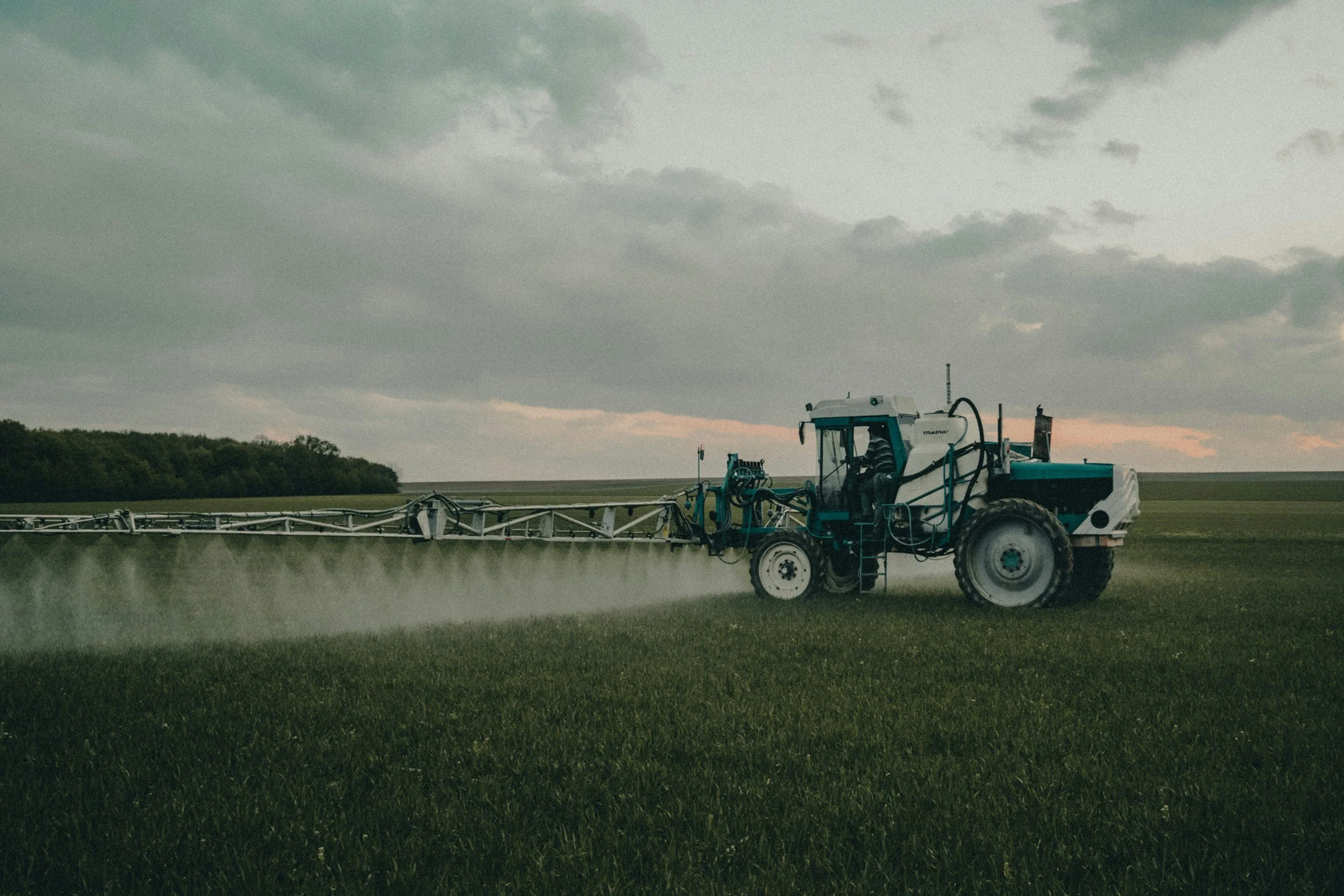
What is it? Glyphosate, best known as an active ingredient in Roundup, is the world’s most widely used herbicide. Since its introduction in 1974, roughly 18.9 billion pounds have been applied globally, with over 280 million pounds sprayed each year. As a non-selective herbicide, glyphosate effectively eliminates a broad range of plants by inhibiting a specific enzyme crucial for plant growth. This makes it highly effective in clearing unwanted vegetation in agricultural fields, roadsides, and other diverse areas. (source)
In addition to its use as a herbicide, glyphosate is also employed as a crop desiccant. This means it is sprayed on crops like wheat, barley, and oats just before harvest to accelerate their drying process. While this practice streamlines and enhances harvesting efficiency, it critically results in glyphosate residues remaining on the crops, thereby entering our food supply. Due to its widespread use in agriculture, glyphosate can also be detected in soil, water, and even food products, including corn, apples, oranges, berries, nuts, and beans.
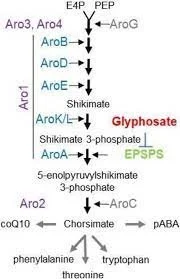
Glyphosate is a powerful herbicide that works by inhibiting an enzyme called EPSPS (5-enolpyruvylshikimate-3-phosphate synthase), a key component of the shikimate pathway in plants. This pathway is essential for producing aromatic amino acids like phenylalanine, tyrosine, and tryptophan, which are crucial for protein synthesis and overall plant growth. These amino acids are vital for plants' survival; blocking their production causes the plant to wither and die.
The herbicide is absorbed through the plant's leaves and then travels through its sap to the roots. There, it prevents the roots from absorbing essential nutrients from the soil, which further contributes to the plant's demise.
What's particularly important for us is that those same three amino acids (phenylalanine, tyrosine, and tryptophan) are also essential for human health. Our bodies can't produce them, meaning we must get them from our diet or rely on our gut microbiota to produce them.
Glyphosate is sprayed on more than 750 different products, and because it’s absorbed into plants themselves, it cannot simply be washed off, cooked out, or baked away from food. For years, glyphosate has been declared safe for humans, the primary argument being that glyphosate targets the shikimate pathway, a metabolic process that is not present in vertebrates. However, the shikimate pathway isn't exclusive to plants. It is also found in a wide range of other organisms, including fungi, parasites, algae, and notably, bacteria. Bacteria rely on the shikimate pathway to synthesize essential amino acids (such as phenylalanine, tyrosine, and tryptophan). This becomes particularly concerning given 54% of bacterial species within the human gut microbiome are sensitive to glyphosate. (source) (source)
Our gut microbiome plays a crucial role in maintaining homeostasis—the body's internal balance. The bacteria residing in our gut help regulate a wide range of processes, including the development and functioning of the immune system, the endocrine system (which controls hormones), and the nervous system. This microbial community is vital for overall health, and when it's disrupted, it can have far-reaching consequences. Changes or imbalances in the gut microbiome have been linked to a variety of health conditions including metabolic disorders, gastrointestinal issues, and autoimmune diseases. (source) (source)
The impact extends to neuropsychiatric and neuroinflammatory diseases, such as anxiety, depression, Alzheimer's, and Parkinson's disease. Recent research has shown that the health of our gut microbiome can influence brain function and behavior, leading to emerging insights into the potential role of gut bacteria in mental health. Given the importance of the microbiome in maintaining overall health, disruptions caused by factors like glyphosate could have significant long-term effects on our well-being. (source) (source)
Recent research increasingly highlights the critical role of the gut microbiome in overall health, leading to concerns about glyphosate’s widespread use. While Europe is on the verge of banning this herbicide, it remains prevalent in the United States. Sprayed on over 750 different crops, glyphosate is absorbed by plants, making it difficult to remove through washing or cooking. Once absorbed, it cannot simply be “baked out” or “cooked out” of the food.
But beyond harming our gut bacteria, glyphosate also deprives us of essential amino acids like phenylalanine, tryptophan, and tyrosine, which are crucial for maintaining bodily homeostasis. Phenylalanine is used to build proteins and is a precursor to tyrosine, which is a building block to make dopamine (important for memory, motivation, mood, sleep, and learning), norepinephrine/epinephrine (which helps regulate stress response, blood sugar regulation, and alertness), makes T3 and T4 (thyroid hormones), and is a precursor to melanin (which provides pigment to our skin, eyes, and hair). Tryptophan is essential for making serotonin (which regulates mood and energy), melatonin (which controls the sleep-wake cycle, seasonal depression, and the menstrual cycle), and can be converted into niacin (vitamin B6).The widespread use of glyphosate not only harms our gut bacteria, but also deprives us of these vital amino acids, potentially impacting our health in multiple ways. (source)
Additionally, food companies have managed to avoid mandatory labeling for products containing pesticides like glyphosate. While glyphosate residues may be present in foods, it is considered a process chemical rather than an ingredient, so it is not required to be listed on labels. Glyphosate is also commonly found in drinking water due to agricultural runoff, further increasing potential exposure. (source) (source)
When shopping for food, one of the best ways to ensure you're choosing products with minimal exposure to harmful chemicals is to look for the Certified Organic label. This label guarantees that at least 95% of the ingredients in the product are organic. Organic products are grown without the use of synthetic fertilizers, antibiotics, or pesticides, and they do not contain artificial colors or flavors. If the product is animal-based, the animals were raised in environments that allow them to exhibit their natural behaviors and were fed organic feed.
Organic foods are also non-GMO (genetically modified organisms). In contrast, foods that have been sprayed with glyphosate are often genetically modified, as the process of genetic modification involves inserting a small piece of DNA, typically from E. coli, into the plant to make it resistant to glyphosate. While this modification allows the plant to survive glyphosate application, it can potentially lead to a variety of other unforeseen issues—though we won't delve into that just yet.
It's important to note that products labeled as “natural” do not necessarily mean they are organic. The term "natural" is not regulated in the same way as “organic,” so it doesn't provide the same assurance of quality or safety.
By choosing Certified Organic products, you can avoid many of the chemicals and practices associated with conventional farming, including glyphosate, and support a more sustainable food system.
Consider this…
Given that glyphosate is found in over 750 products, should there be more regulation and transparency around its use in agriculture and food supply?
How does glyphosate's impact on the gut microbiome raise concerns about its long-term effects on human health, especially when it comes to mental health disorders?
What are the potential dangers of glyphosate on human health, given that 54% of our gut bacteria are sensitive to it?
If glyphosate is linked to conditions like anxiety, depression, and neuroinflammatory diseases, should we reconsider its role in modern agriculture?
Related content:
The Introduction of Glyphosate: The Silent Invasion of Our Food Supply